Do Golf Simulator Rounds Count Toward Your Handicap?
By PingAces Team · November 4, 2026
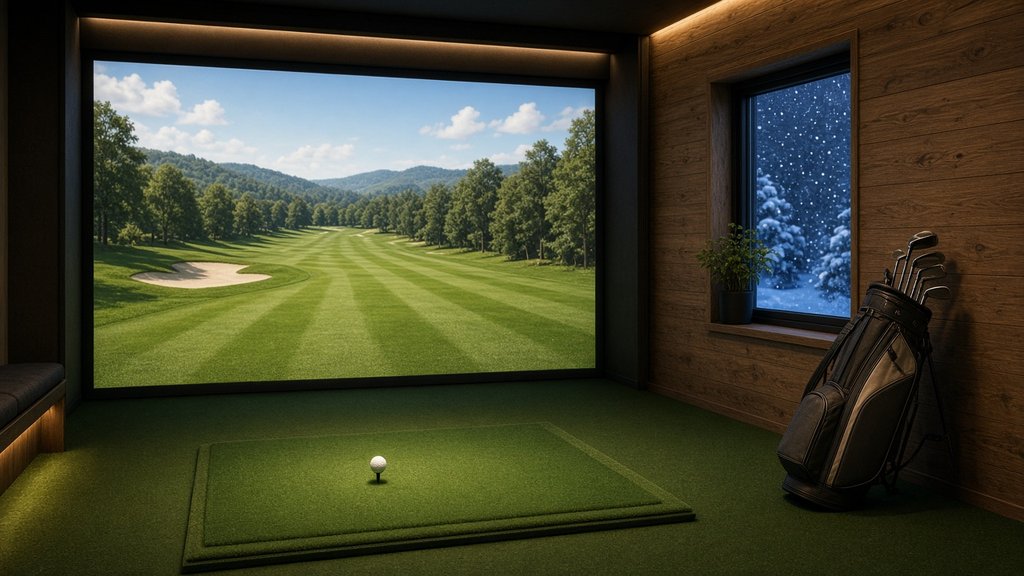
Once the leaves are down and the frost delays start, a lot of golfers move their game indoors. Simulator bays are a great way to keep your swing sharp through the winter, and some of them will happily hand you a scorecard after 18 virtual holes. So the obvious question comes up every November: can you post that score to your handicap?
The short answer is no. A simulator round is not an acceptable score for an official Handicap Index. But that doesn't mean indoor scores are worthless. Here's why they don't count, what you can do with them instead, and how to keep your handicap healthy until spring.
What makes a score acceptable for handicap purposes
Under the World Handicap System, the USGA's Rule 2.1 of the Rules of Handicapping lists the conditions a round has to meet before its score can count. The round must be played:
- In an authorized format of play, over at least the minimum number of holes for a 9-hole or 18-hole score.
- In the company of at least one other person, who can also act as your marker.
- By the Rules of Golf.
- On a golf course with a current Course Rating and Slope Rating, where length and normal playing difficulty are maintained at a consistent level.
- On a golf course during its active season.
The same rule adds that the score must also be certified, and that if any one of those requirements isn't met, the score is not acceptable. The USGA's Acceptability of Scores overview sums it up the same way and adds the hole minimums: at least 10 holes for an 18-hole score, and all 9 holes for a 9-hole score.
Why a simulator round falls short
The key phrase is "on a golf course." Course Rating and Slope Rating describe the difficulty of a specific physical course and set of tees. (If those two numbers are fuzzy for you, our guide to Course Rating vs. Slope Rating walks through them.) A simulator may load a famous course and even borrow its ratings, but you aren't playing that physical course. You're hitting off a mat into a screen, and the software decides how the ball reacts on landing, how the greens roll and what counts as holed.
Our take: even when a sim round is solid golf, settings like auto-putting, gimmes or mulligans would make it a different test than the one the ratings were built for. That's a big reason the rules keep the line at real, rated courses.
Golf Canada says it plainly in its October 23, 2026 guidance on fall scoring: "Indoor scores do not count toward your Handicap Index."
Indoor scores still have a home
Not counting toward your handicap isn't the same as not counting at all. A few options are worth knowing about.
Golf Canada's indoor tracking
Golf Canada added indoor simulator integration to the Golf Canada App, which lets golfers record simulated 9- or 18-hole rounds and practice sessions at participating Golf Canada member facilities. The same update added average putts per round to the app's stats. Golf Canada's fall article describes this as a way to track your indoor game and follow your progress until spring, while repeating that those indoor rounds stay out of the Handicap Index.
Simulator-only handicaps
Some services build a separate handicap just for indoor golf. SimCap, for example, describes its number as a simulator-specific index that is not an official WHS Handicap Index and is not affiliated with GHIN. It says it starts from a WHS-style differential using the course rating and slope, then adjusts for simulator conditions such as putting mode, pin placement, wind and mulligans. That kind of number can be handy for a winter league or for matches with friends, as long as everyone understands it lives apart from your official record.
Your own round history
Our take: the most useful thing to do with indoor scores is to keep them labeled as indoor scores. Mixing them into your real-course numbers makes it harder to see what's actually changing in your game. Keep them separate, and you can still compare winter sessions against each other.
How to keep your handicap moving in winter
If you want acceptable scores during the cold months, you'll need to play outdoors on a rated course that is in its active season. That depends on where the course is, not where you live. Golf Canada lists Ontario's active season as April 15 to October 31 and British Columbia's as March 1 to November 15, and notes that Florida observes a year-round active season. So an Ontario golfer who plays in Florida in January must post that otherwise acceptable score, according to the same Golf Canada article.
We covered the U.S. side of this, including how to post Away scores on a trip south, in Handicap Inactive Season: Can You Still Post Winter Scores?
And if you're brand new to handicapping, remember that indoor rounds won't help you get started either. The USGA Rules of Handicapping require acceptable scores from at least 54 holes to obtain an initial Handicap Index, and simulator rounds don't qualify as acceptable scores.
Make the most of a simulator winter
Here's our take on how to use indoor time well, since none of it depends on your handicap:
- Practice with a purpose. Pick one or two things to work on, such as wedge distances or a start line with the driver, instead of just playing round after round.
- Use realistic settings. If you do play full rounds, turn off the extras that make scoring easier so the numbers tell you something.
- Play with friends. Sim rounds are social, and a friendly match keeps winter golf fun. If your group is spread out, you can set up a virtual match on PingAces for when you're all back outside.
- Book a spring warm-up round. Your first acceptable score of the season will come from a real course, so plan it.
The bottom line
Simulators are a great winter tool, but under the World Handicap System a simulator score is not an acceptable score, because it isn't played on a rated golf course in its active season. Keep tracking indoor rounds for your own progress or a sim league, and save your official posting for real courses.
Want one place for your real rounds, friends and matches? See what you can track on our features page, or join PingAces free and be ready when the courses open.
Sources
- USGA: Rules of Handicapping, Rule 2.1 Acceptability of Scores
- USGA: Acceptability of Scores
- USGA: Rules of Handicapping (effective 2024), PDF
- Golf Canada: Still playing this fall? Here's when your scores count
- Golf Canada: New indoor simulator integration feature
- SimCap: What Is a Simulator Golf Handicap?
The featured image is an AI-generated illustration and does not show a real facility or course.